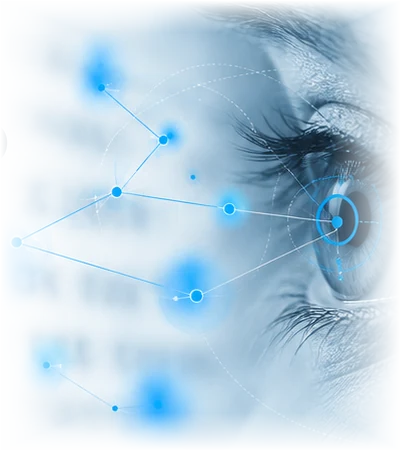
Gaze recording
We use a high-precision eye tracker to record gaze position while participants complete experimental tasks.
LAPELC² / RESEARCH / EYE TRACKING
We study patterns of gaze during reading, listening, and other cognitive tasks to investigate mental processes as they unfold.
We use a high-precision eye tracker to record gaze position while participants complete experimental tasks.
Gaze data are processed to identify fixations, saccades, and visual exploration patterns, aligned with stimulus presentation.
We analyze gaze patterns to investigate attention, language processing, decision-making, and comprehension.
Processing words, sentences, and texts across contexts.
Integration of language, vision, speech, and gesture.
Studies with children, adults, and clinical populations.
Analyzing fixation patterns during reading.
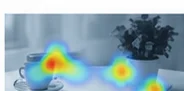
Visual exploration of static or dynamic scenes.
Attention to faces, gestures, and events.

Locating targets and comparing alternatives.
Eye tracking can be combined with behavioral and neurophysiological measures for a more comprehensive picture of cognitive processes involved in language.