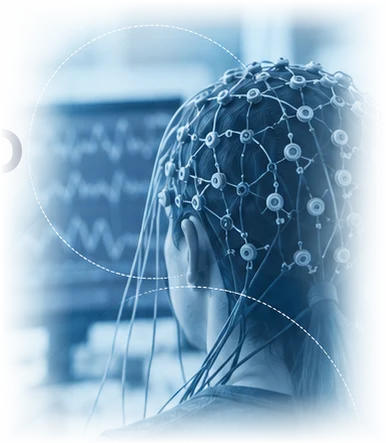
Neural recording
We use high-density EEG to record electrical brain activity while participants perform language tasks.
LAPELC² / RESEARCH / ELECTROENCEPHALOGRAPHY
We investigate neural activity associated with language processing using electroencephalography (EEG) and event-related potentials (ERPs).
We use high-density EEG to record electrical brain activity while participants perform language tasks.
Signals are preprocessed to address artifacts and extract time-resolved measures, including event-related potentials (ERPs) and neural oscillations.
We analyze neural response patterns to investigate cognitive processes involved in language perception, comprehension, and production.
Investigating neural processes involved in reading, listening to, and producing sentences.
Studying speech perception, prosody, and the integration of linguistic and paralinguistic information.
Research with children, adults, and clinical populations to understand individual differences and developmental trajectories.
Analyzing neural responses during auditory comprehension and speech production.
Investigating visual and lexical processing of words and sentences.
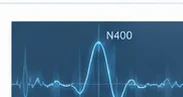
Neural responses to unexpected or semantically incongruent stimuli.

Studying the integration of auditory and visual information in speech perception.
EEG can be combined with behavioral measures and eye tracking to provide a more comprehensive understanding of the cognitive processes underlying language.